
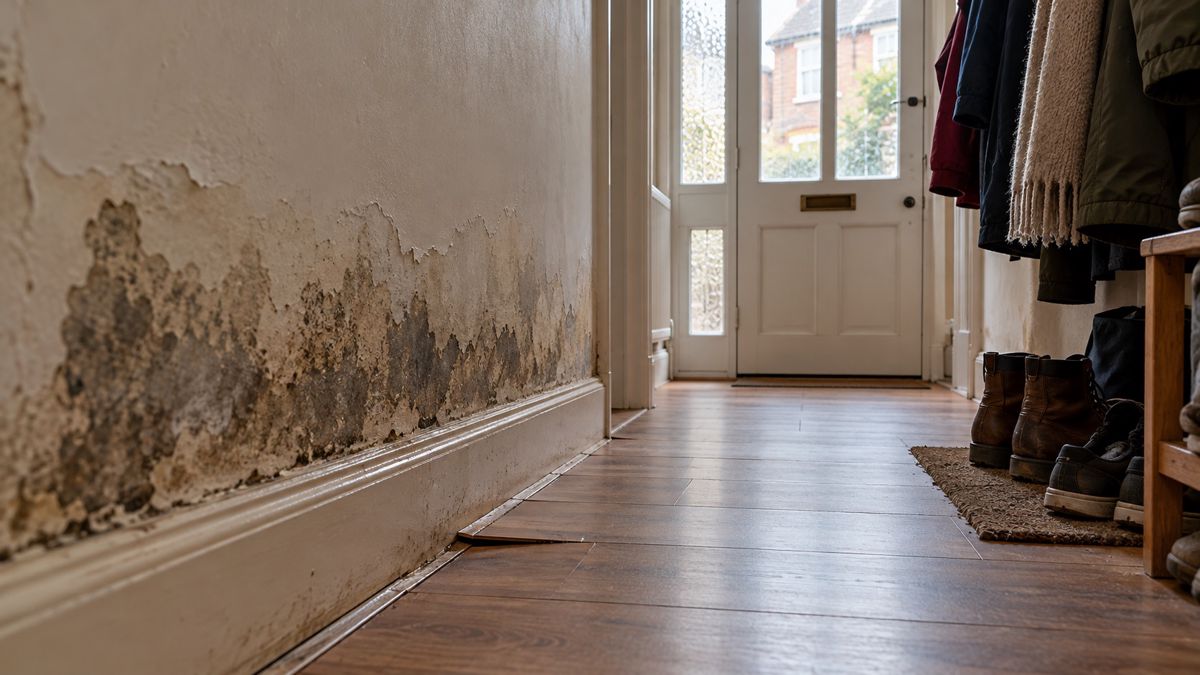
Yes, a leak can sit under your floor for weeks without any water showing. In the US this is called a slab leak, and the same thing happens in Norwich homes with solid concrete floors. The usual clues are a bill that creeps up, a boiler that keeps losing pressure, a damp patch that will not dry, or a floor that feels warm in the wrong place. This guide explains each sign, how to check, and what to do first.
What is a hidden leak under a solid floor?
A slab leak is a leak in a pipe that runs under or inside a solid concrete floor. Many Norwich houses built from the 1930s onwards, and most extensions and conservatories, have ground floors made of concrete with a sand and cement screed on top. Water pipes and central heating pipes are often buried in that screed or in the concrete below it.
Older Victorian terraces are different. Many have suspended timber floors with a crawl space underneath, so a leak there is easier to see and reach. But even these houses often have a solid floor in the kitchen, the hallway or a rear extension, and that is where hidden leaks tend to start.
Pipes buried in a floor cannot be seen, so the water finds its own way out. It may soak into the ground, run along the underside of the slab, or rise slowly through the screed into your flooring.
Which signs point to a leak under the floor?
No single sign proves it. Several together make a leak much more likely. Watch for these:
- A water meter that moves when nothing is running. If you are on a meter and the dial keeps turning with every tap off, water is going somewhere.
- A higher water bill with no change in how many people live in the house.
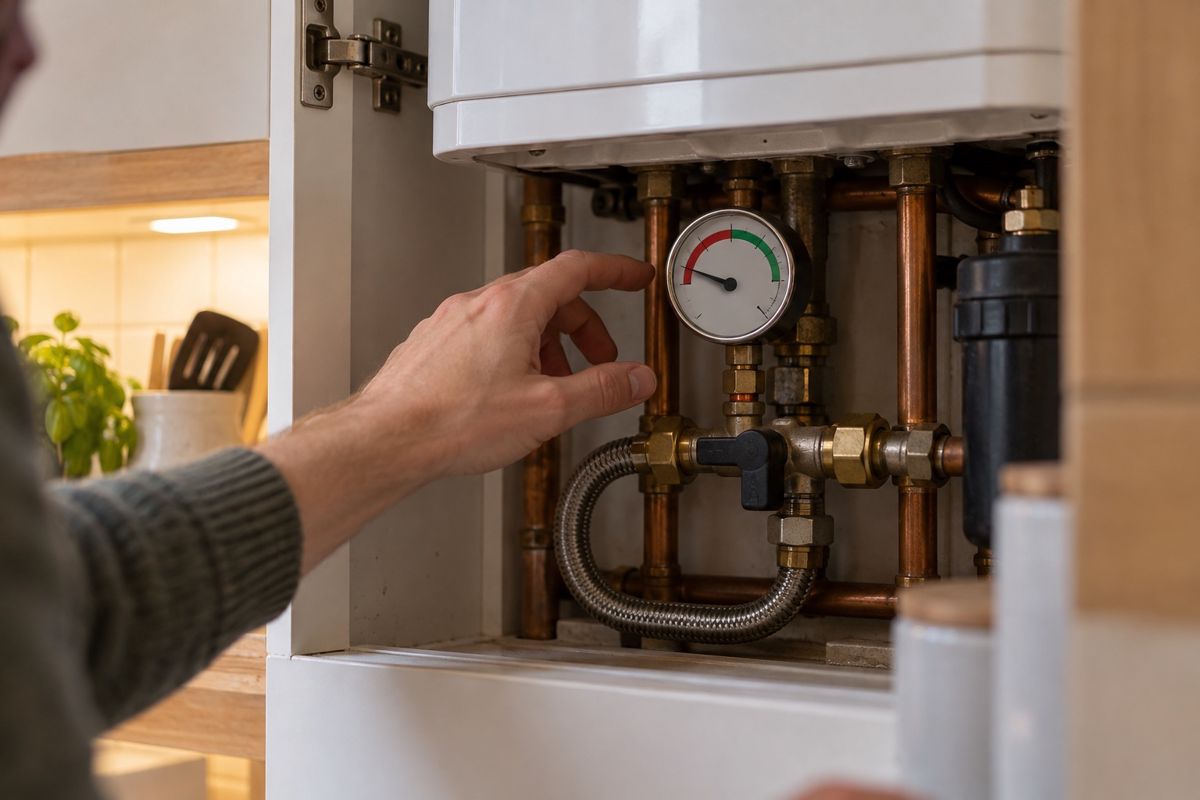
- A boiler that keeps dropping pressure. A sealed central heating system should hold its pressure. If you top it up every few weeks, a heating pipe may be leaking under the floor.
- Damp or discoloured flooring. Look for lifting laminate, curling vinyl, dark patches on carpet or a musty smell.
- A warm or hot patch on the floor. A leaking hot water or heating pipe can warm the screed above it.
- Cracks or a hollow sound in tiles and gaps opening at the skirting boards.
- The sound of running water in a quiet house at night.
- Damp rising on the lower part of a wall that does not match the usual rising damp pattern.
Take photographs and note the date. They help later when you speak to a plumber or your insurer.
Why do pipes leak under floors in Norwich homes?
The causes are usually ordinary wear rather than anything dramatic.
- Age and corrosion. Copper pipes and old steel heating pipes can pit and fail, especially where they sit in wet sand or damp screed.
- Hard water. Norfolk has hard water because it passes through chalk. Limescale builds up inside pipes, fittings and heating components over time and can shorten their life.
- Movement. Ground that shifts a little through wet winters and dry summers can strain joints buried in the floor.
- Poor original work. Pipes laid without protection, or joints made in the screed, can fail decades later.
- Old lead supply pipes. Some older properties still have a lead supply pipe on the way in. It is worth asking about during any repiping work.
How can I tell it is a leak and not condensation or a heating fault?
Start with a simple meter check if you have a water meter. Turn off every tap and appliance, make sure no one flushes a toilet, then note the meter reading. Wait an hour and look again. If the reading has moved, water is escaping somewhere. Check taps, toilet cisterns and outside taps first, because a running toilet is a very common cause.
If you have no meter, close the main stopcock, which is often under the kitchen sink or near the front door. If a damp patch stops growing after you do, the leak is on the cold supply. If the boiler pressure keeps falling even with the stopcock closed, the leak is more likely in the heating pipes, which are a separate sealed system.
Condensation, a leaking radiator valve, a failed seal around a bath or a blocked gutter can all make a wall or floor damp too, so rule those out before assuming the worst. A plumber can test each pipe circuit separately to narrow it down.
What should I do first?
- Close the stopcock if water is clearly coming through the floor, and open a cold tap to drain the pipes.
- Keep electrics away from water. If wet flooring is near sockets or appliances, switch off at the consumer unit if it is safe to reach.
- Protect belongings. Lift rugs and move furniture away from damp areas.
- Photograph everything and write down meter readings and dates.
- Tell your home insurer. Many policies cover escape of water, but they often want to be told before repairs begin.
- Check who is responsible. The supply pipe from the boundary to your house is normally the homeowner's. The water company looks after the main in the street.
How are hidden leaks found and fixed?
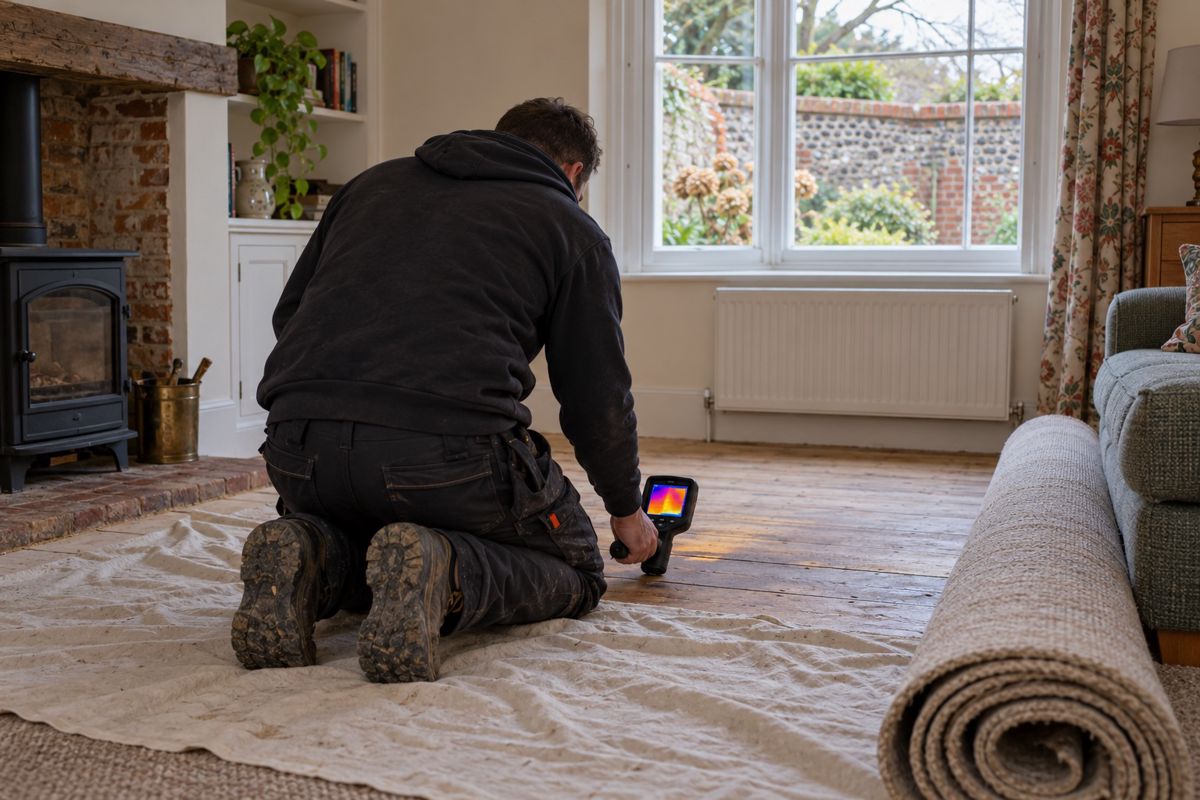
Good leak detection avoids digging up the whole floor. A plumber will usually combine several methods.
- Pressure tests on the supply and heating circuits to show which one is losing water.
- Acoustic listening equipment that picks up the sound of escaping water through the floor.
- Thermal imaging to spot warm patches from hot pipes.
- Moisture meters to map where the damp is strongest.
- Tracer gas in some cases, where a harmless gas is put in the pipe and detected at the surface.
Once the leak is located, the options are a small local repair, or re-routing the pipe so it no longer runs under the floor. Re-routing along walls or through the ceiling void is common because it avoids repeat problems. If the pipes are old and failing in several places, repiping the house may make better sense than a string of repairs. Repairs to a heating pipe may also mean draining the system and refilling it afterwards.
Drying the floor properly before new flooring goes back down matters, because trapped damp leads to mould and lifting boards.
When should I call a plumber?
Call as soon as you suspect a leak. Hidden water does not stop by itself, and a slow leak can wash out the ground under a slab or damage floors and walls. A quick survey costs far less than repairing damp walls later.
If you are in Norwich or nearby and want the cause found, see our page on slab leak detection and repiping. We explain what we find and quote in writing before any work begins. If water is already pouring in, close the stopcock and use our emergency plumbing page.